CHANGEMAKERS OF INDIA:
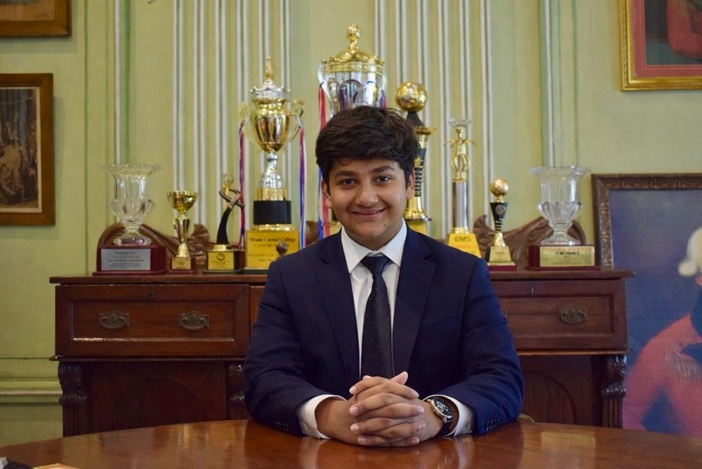
Syed Ali Husain Rizvi
There is a particular kind of frustration that comes from watching a system fail people who have no alternative to it. Syed Ali Husain Rizvi first felt it at seventeen, sitting in a village in Lakhimpur Kheri, listening to a farmer explain why he preferred a moneylender who charged 20% interest over a bank branch twelve kilometres away.
“He wasn’t being irrational,” Ali says. “He was being precise. The bank required documentation he didn’t have, collateral he couldn’t offer, and time he couldn’t spare. The moneylender required none of that. When you understand his constraints, his choice is completely logical.”

That conversation is where the Changemaker Project began.
A Trust Problem, Not a Knowledge Problem
Most financial literacy programmes start from a simple premise: people make poor financial decisions because they lack information. Give them the information, and the decisions improve.
Ali thinks this premise is wrong.
“Financial exclusion isn’t a knowledge problem. It’s a trust problem,” he says. “The people I met in Lakhimpur Kheri understood money. What they didn’t trust, with very good reason, was the institutional infrastructure built around it.”
A knowledge problem is solved with education. A trust problem needs something harder: showing people, repeatedly and in person, that the system can work for them. It needs presence, not pamphlets.

Taking It to the Villages
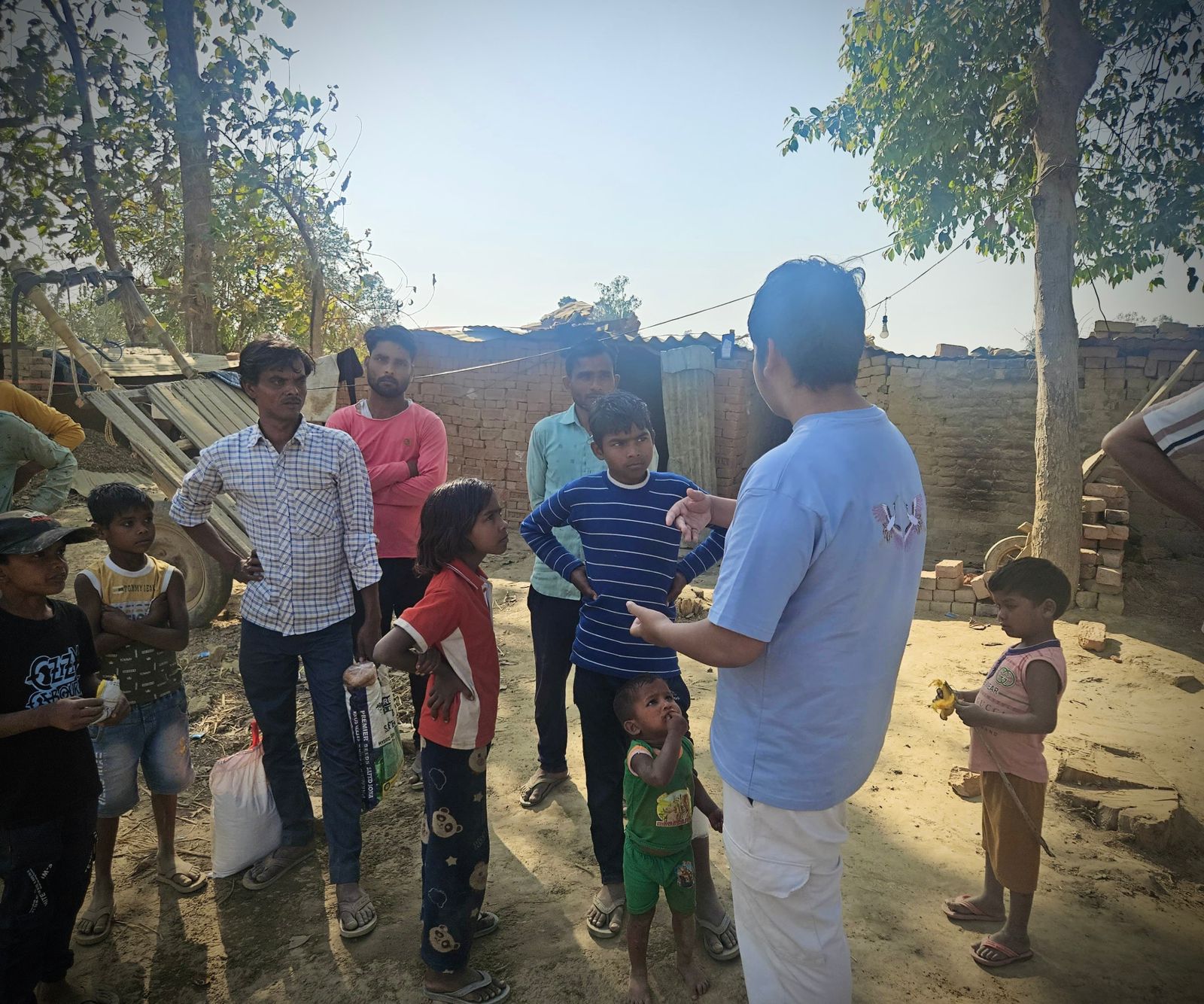
Founded by Ali while he was still in Class X, the Changemaker Project runs financial literacy workshops directly inside rural communities across Uttar Pradesh. Not in auditoriums. Not online. In the places where the problem actually lives.
A Changemaker Project workshop in rural Uttar Pradesh.
The curriculum does not lecture. It walks farmers, daily wage workers, and small traders through the real cost of informal credit, how digital payments work, and what formal banking can offer when it is actually accessible. Ali says the project has reached more than 15,000 families across rural Uttar Pradesh through 20-plus workshops, run on a framework he built called FLEAT (Financial Literacy, Education and Training). He was also named a Youth Ambassador by HundrED, a Helsinki-founded nonprofit that identifies promising education innovations worldwide.
Local Pradhan/Administrator of village Baudhiya Kalan, Nighasan, Lakhimpur Kheri Mr Syed Maksud Ali says “What impressed me most was that Ali never assumed he understood our problems because he had studied economics. He understood them because he was willing to listen. That is rare. The workshops succeeded because people felt they were part of the conversation, not just the audience.”
The project has run more than 20 workshops across the state.
“I went to the villages,” Ali says, describing how the project came together. “I listened more than I spoke. And I stopped trying to convince people of things they already knew.”
The Platform That Crossed Borders
Running alongside the fieldwork is The Money Clause, an economics and finance platform Ali founded to make financial thinking accessible to young readers.
Ali says the platform now reaches more than 250,000 readers in India and abroad, with a companion financial literacy toolkit reaching another 7,500. Its writers, a rotating team of students from several countries, cover monetary policy, capital markets, microfinance, and behavioural economics.
“When I first joined The Money Clause, I expected to write articles about finance. Instead, I found myself questioning how I thought about problems. Ali never asked us to write something because it sounded impressive; he asked whether it would actually help someone understand. I think that’s what makes him different. He doesn’t see economics as a subject to study, he sees it as a tool to solve problems people live with every day. That changed the way I write, and honestly, the way I think.”
– Japjot Singh, Writer, The Money Clause
This year, the platform ran its first workshop outside India: a live session for over 150 secondary students in Nigeria, facilitated by Ayomide Favour Akande, a youth educator based there. Ali joined from Lucknow over a video call.
Ali, from Lucknow, and Ayomide Favour Akande led the Nigeria session over video call.
“The conversation in Nigeria was identical to the one in Lakhimpur Kheri,” he says. “Same questions. Same frustrations. Same gap between what people know and what institutions make available to them. That confirmed something for me. This isn’t a local problem. It’s a design problem. The system is built in ways that exclude people.”
The Money Clause has also been endorsed by the Business & Economics Club at Lucknow University.
The Academic Record Underneath
The extracurricular work has not come at the cost of the classroom.
Ali placed 8th in the country, All India Rank 8, in the ICSE board examinations, with a 98.4% average, one of the highest scores in a board exam known for its rigour. At La Martiniere College, he is Salutatorian, ranked second in a class of more than 300, as well as Vice-Captain and Debate Captain, a role in which he runs weekly training sessions for more than 350 students.
In June, he won first place and was named Final Best Speaker at the Indian Debating League’s World Economics British Parliamentary Debate 2026, against more than 30 national teams across four rounds. The motions covered AI-driven market disruption, Keynesian policy under inflation, and global trade architecture.
A research paper he wrote on artificial intelligence and labour markets, arguing that headline employment figures obscure a structural mismatch between displaced workers and the new jobs technology creates, was published in the Oxford Journal of Student Scholarship under the title “The Productivity Paradox Revisited: Artificial Intelligence, Labour Market Restructuring, and the Inequality Trap.”
Asked what success would look like ten years from now, Ali doesn’t mention awards or universities. “If one day financial literacy is taught before people make their first financial mistake,” he says, “I’ll know we built something that mattered.”
Syed Ali Husain Rizvi is the founder of The Money Clause (themoneyclause.com) and the Changemaker Project. He is a Class XII student and Vice Captain of La Martiniere College, Lucknow.